Professional AI headshot with studio photographer insights
Goes beyond 'studio lighting + neutral background' — includes catchlight placement, expression psychology, background color theory, and wardrobe choices that real portrait photographers use.
Result proof
Proof recommended · Generated image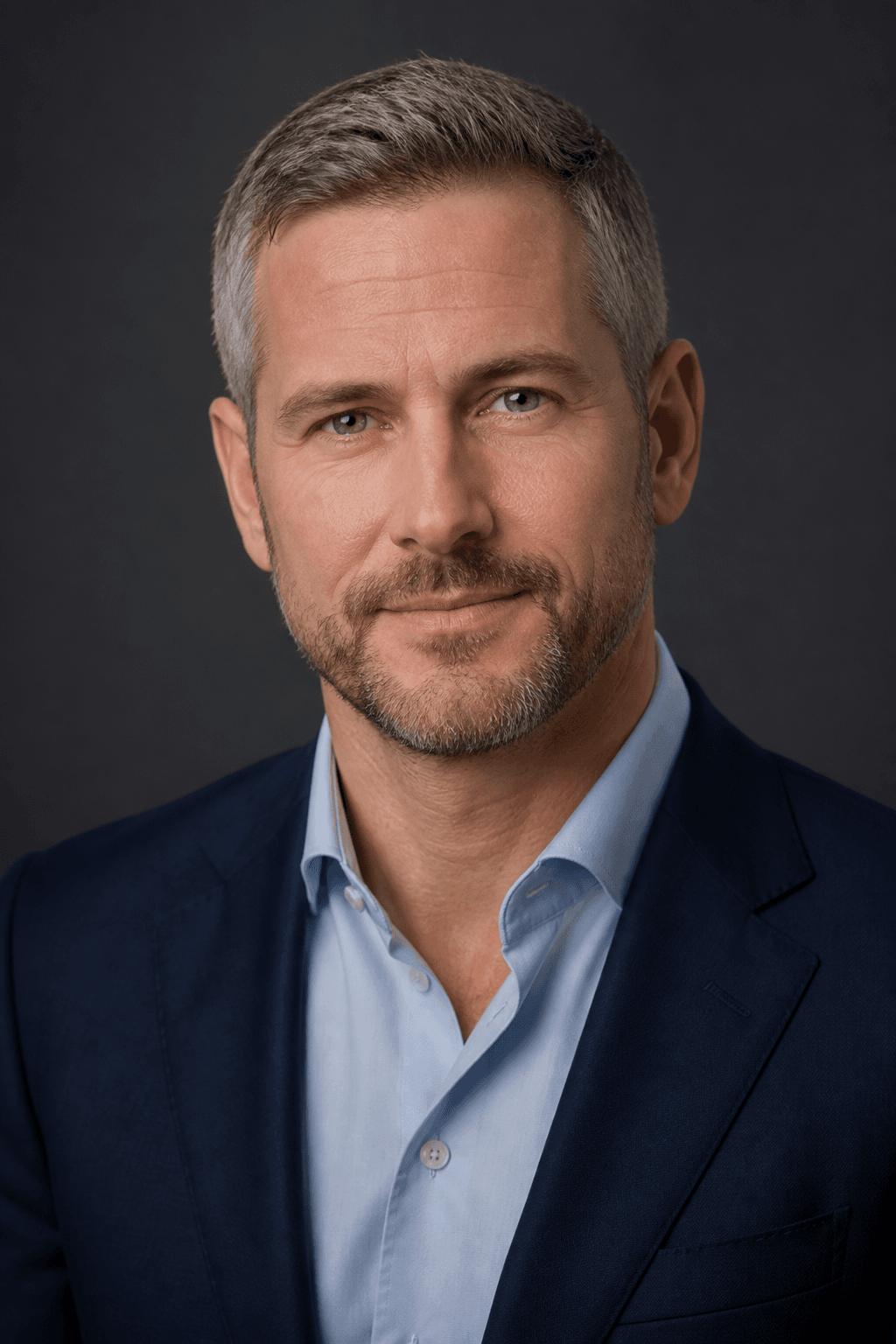
Generated professional headshot proof
GPT Image 2 sample showing catchlights, compressed portrait geometry, and studio lighting from the headshot prompt.
Prompt
'A professional corporate headshot of [PERSON DESCRIPTION, e.g. a woman in her early 30s with shoulder-length dark hair], [BACKGROUND COLOR] seamless backdrop, [LIGHTING SETUP], wearing [WARDROBE], neutral expression with a slight closed-mouth smile, eyes engaged with the camera, single circular catchlight at 2 o'clock position in each eye, shot on 105mm f/2, sharp focus on the iris, natural skin texture with visible pores, subtle hair light separation --ar 4:5 --style raw'

Worked example: 'A professional corporate headshot of a man in his 40s with short gray hair and a trimmed beard, charcoal gray seamless backdrop, Rembrandt lighting with a large octabox at camera-left and white fill card at camera-right, wearing a navy suit jacket over a light blue open-collar shirt, neutral expression with a slight closed-mouth smile, eyes engaged with the camera, single circular catchlight at 2 o'clock position in each eye, shot on 105mm f/2, sharp focus on the iris, natural skin texture with visible pores, subtle hair light separation --ar 4:5 --style raw'

Why these choices matter:

Expression: 'Neutral with slight closed-mouth smile' beats 'confident and approachable' every time. The first describes a PHYSICAL state the generator can render; the second is an abstract emotion it has to guess at. Avoid teeth — AI still struggles with them and they can look uncanny.

Catchlights: Specifying 'single circular catchlight at 2 o'clock' mimics a real softbox reflection. Without this, eyes look flat and lifeless — catchlights are what make a portrait feel 'alive.'

Background color psychology:
• Medium gray — safest, works for any industry
• Charcoal / dark gray — adds gravitas, executive feel
• Light blue-gray — approachable, tech/creative industries
• White — clean but can look washed out without rim lighting
• Warm beige — friendly, coaching/wellness
• Avoid: bright colors, gradients, or outdoor backgrounds for corporate use

Wardrobe color theory: Navy and charcoal photograph best and convey competence. Avoid pure black (absorbs into dark backgrounds) and pure white (blows out highlights). A pop of color at the collar — light blue shirt, subtle pattern — draws the eye to the face.

Lighting: Specify the SETUP, not just 'studio lighting.' 'Rembrandt lighting with octabox at camera-left' gives you the classic portrait triangle on the cheek. Add 'white fill card at camera-right' to control contrast, and 'subtle hair light' to separate the subject from the background.

105mm over 85mm: Slightly more compression = slightly more flattering. Both work, but 105mm is the studio portrait standard.
- Source
- promptfork seed
- License
- CC-BY-4.0
- Published
- 6/27/2026